
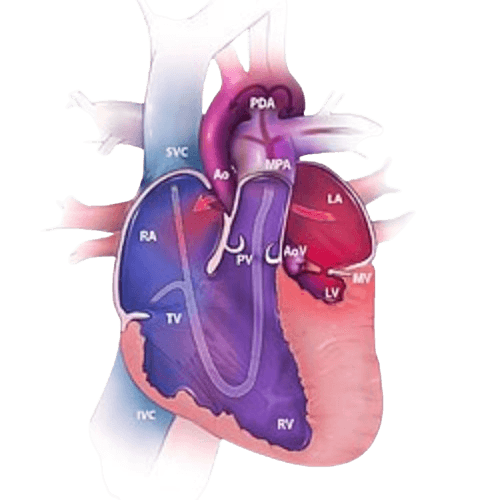
Hypoplastic Left Heart Syndrome (HLHS)
Hypoplastic Left Heart Syndrome (HLHS) is a critical congenital heart defect in which the left ventricle, mitral valve, and aorta are underdeveloped.
The condition prevents effective systemic blood flow, requiring urgent intervention after birth.
Modern staged surgical approaches — Norwood, Glenn, and Fontan — have transformed outcomes, allowing survival into adulthood with lifelong care.
Overview And Clinical Background
A complex congenital cardiac anomaly
HLHS is one of the most severe congenital heart conditions.
Without surgical palliation, it is fatal shortly after birth due to inadequate systemic output.
Symptoms, Signs And Presentation
Symptoms appear soon after birth as the ductus arteriosus closes.
Immediate stabilization is critical for survival.
Diagnosis Methods And Investigations
Early detection through fetal and postnatal imaging
HLHS is often diagnosed prenatally via fetal echocardiography.
Confirmation and stabilization follow at birth.
Treatment Options And Surgical Techniques
Three-stage surgical palliation reconfigures circulation to ensure oxygenation and systemic output.
Recovery, Risks And Prognosis
Survival rates have improved greatly, with many children living into adulthood.
Long-term care is required for arrhythmias, protein-losing enteropathy, or heart failure.
Why Choose Us
CureU Healthcare offers advanced pediatric cardiac care with staged surgical planning, intensive neonatal support, and lifelong follow-up under congenital specialists.
Conclusion
With expert management, children with HLHS can achieve good quality of life.
Staged surgery and coordinated cardiac care ensure steady progress from infancy to adulthood.